Some books come to me, and Ross Jackson's 'Occupy World Street' came to occupy my street. A gentleman I had met at the Graham Hancock show at Capitola Book Café sent me an email telling that Ross Jackson would be in town — and that this did not happen often. Would I like to look at his book and perhaps talk to him?
Having done the former, I arranged to do the latter, and caught him at a luncheon being held at the Institute for the Future. I should have known I'd end up in the right place. IFTF were very helpful and accommodating, giving us an office in the back where we could discuss the book.
Jackson is a strong writer, and more of a contemplative, intricate speaker, intent on getting the details right. There were a lot of details to discuss and we took a methodical approach to the book. That's appropriate because the book takes a methodical approach to a very complicated problem and comes up with a usable solution. It is worth taking the time.
Accordingly, since we had some unfinished topics at the conclusion of our first hour of conversation, we both wanted to come back and finish the job right. We did so in a second short interview.
"...over the years, I had heard through my friends that he had stopped using money and was living in a cave..."
—Mark Sundeen
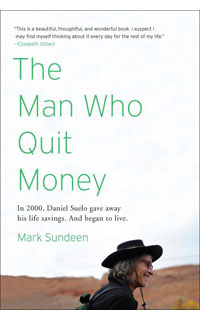
Even if you are living in cave, the chances are that you have heard of Daniel Suelo, though chances are you aren't neighbors. In a world where the economy has been shattered into tiny little bits and pieces, a man who has given up money, and in fact all forms of exchange, seems automatically compelling.
Of course, to live beyond the mere sound byte of what they call the "blog roll mention" (I'm always reminded of toilet paper when I hear that phrase), Suelo has got have a story told, and told in a compelling manner. And fopr that we have his old buddy, Mark Sundeen. Sometime back in the Triassic Era (at least, so far as the "news roll" is concerned), Sundeen and Daniel Shellabarger, had been friends living on the edges of a society they distrusted, and with good reason.
It was our world in its nascent stages. Sundeen went on to become a writer, while Shellabarger spent a bit of time tree-sitting before he gave it up and then gave up money and all the appurtenances of modern commerce. His reasoning was along the lines of some (including myself during the dark days when astrology ruled the United States) who give up casting a ballot; "I don't vote, it just encourages them."
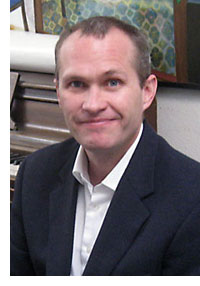
But as always, there is much more to it than that. There is a story, well told, in Sundeen's novelistic 'The Man Who Quit Money.' The prose has the solid feel of a quiet decision. Sundeen dials back, and invests his old friend, now, and not without irony, the subject of Sundeen's own commercial ambitions, with a deep sense of dignity. You can hear my phone interview with Mark Sundeen by following this link to the MP3 audio file.
05-08-12 UPDATE:Podcast Update: Time to Read Episode 43: Christopher Moore, 'Sacré Bleu'
Click image for audio link.
Here's the forty-third episode of my new series of podcasts, which I'm calling Time to Read. The podcasts/radio broadcasts will be of books worth your valuable reading time. I'll try to keep the reports under four minutes, for a radio-friendly format. If you want to run them on your show or podcast, let me know.
My hope is that in under four minutes I can offer readers a concise review and an opportunity to hear the author read from or speak about the work. I'm hoping to offer a new one every week.
The forty-third episode is a look at Christopher Moore, ''Sacré Bleu'.
"I don't view any of my characters as being crazy..."
— David Vann
David Vann's 'Dirt' is a peculiar novel. In one sense, it is unrelentingly grim, a dysfunctional family story with icky overtones and wrong behavior on a small scale with the feel of grand tragedy. But if you are twisted enough to appreciate the comedy, it is also (often) screamingly funny. That dichotomy is unsettling.
It's not a little unsettling to talk with David Vann himself, who is sunny, smart and when we spoke, was ensconced in a suburban community that looks upon gorgeous green California foothills. Still, you can imagine that somewhere in the neighborhood, there is a run-down walnut ranch, where a creepy mother is keeping her son's life on hold as well as holding on to an inheritance she only marginally deserves. But mostly, talking with David Vann is fun, and I can't imagine anyone who hears this interview not wanting to read 'Dirt,' like yesterday.
The interview begins with David reading an entire chapter from 'Dirt,' a dinner scene that will put you off tuna casserole forever. I've never had the very dubious pleasure of eating this supposed foodstuff, and after hearing David's reading ... well, I'll let the listeners decide.
Once we got into the meat of the interview, it seemed like a guilty pleasure. We were having an enormous amount of fun talking about the realistically wretched lives Vann creates in 'Dirt.' I trust that readers and listeners will enjoy the interview as much as we did, and more importantly, that it will give them the right sensibility with which to approach 'Dirt.' This novel is shockingly fun to read. Let David Vann tell you why by following this link to the MP3 audio file.
New to the Agony Column
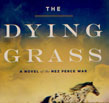
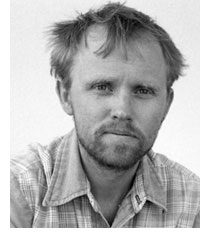
09-18-15: Commentary : William T. Vollman Amidst 'The Dying Grass' : An Epic Exploration of Simultaneity
Agony Column Podcast News Report : A 2015 Interview with William T. Vollman : "...a lot of long words that in our language are sentences..."
09-05-15: Commentary : Susan Casey Listens to 'Voices in the Ocean' : Science, Empathy and Self
Agony Column Podcast News Report : A 2015 Interview with Susan Casey : "...the reporting for this book was emotionally difficult at times..."
08-21-15: Agony Column Podcast News Report : Senator Claire McCaskill is 'Plenty Ladylike' : Internalizing Determination to Overcome Sexism [Incudes Time to Read EP 211: Claire McCaskill, Plenty Ladylike, plus A 2015 Interview with Senator Claire McCaskill]
Agony Column Podcast News Report : Emily Schultz Unleashes 'The Blondes' : A Cure by Color [Incudes Time to Read EP 210: Emily Schultz, The Blondes, plus A 2015 Interview with Emily Schultz]
07-05-15: Commentary : Dr. Michael Gazzaniga Tells Tales from Both Sides of the Brain : A Life in Neuroscience Reveals the Life of Science
Agony Column Podcast News Report : A 2015 Interview with Michael Gazzaniga : "We made the first observation and BAM there was the disconnection effect..."
04-21-15: Commentary : Kazuo Ishiguro Unearths 'The Buried Giant' : The Mist of Myth and Memory
Agony Column Podcast News Report : A 2015 Interview with Kazuo Ishiguro : ".... by the time I was writing this novel, the lines between what was fantasy and what was real had blurred for me..."
Agony Column Podcast News Report : A 2015 Interview with Marc Goodman : "...every physical object around us is being transformed, one way or another, into an information technology..."
Agony Column Podcast News Report UPDATE: Time to Read Episode 199: Marc Goodman : Future Crimes: Everything Is Connected, Everyone Is Vulnerable and What We Can Do About It