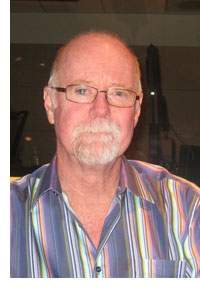
In my wanderings through the audio landscape, I've spent a fair amount of time at KQED in San Francisco, where I revently had the privilege of meeting the one and only Ian Shoales.
Téa Obreht is as bustling with words and power as her novel, 'The Tiger's Wife,' but she smiles a lot more than the novel does, and she is positively bursting with creative joy. I spoke to her upstairs at Bookshop Santa Cruz — after she had driven directly up from Los Angeles. I had actually made the exact same journey the day before, and I can assure readers that I was bristling with nothing other than backache.
Of course, Téa had taken the scenic route, which makes perfect sense, given the feel and style of her novel. She had stopped at Hearst Castle, where she noted that William Randolph Hearst had imported a ceiling from Europe that was older than this country. This makes perfect sense if you read her book. Téa Obreht has a very unique vision of the world around her.
She also has enough energy to write such a novel, and the empathy to worry that my standard-issue coughing fit was somehow her fault. And she lives up to her cover-girl beauty shot. And she's just about a year older than my son, which makes her the youngest author to win the prestigious Orange Prize.
01-17-12 UPDATE:Podcast Update: Time to Read, Episode 27: John Lescroart, 'The Hunter'
Click image for audio link.
Here's the twenty-seventh episode of my new series of podcasts, which I'm calling Time to Read. The podcasts/radio broadcasts will be of books worth your valuable reading time. I'll try to keep the reports under four minutes, for a radio-friendly format. If you want to run them on your show or podcast, let me know.
My hope is that in under four minutes I can offer readers a concise review and an opportunity to hear the author read from or speak about the work. I'm hoping to offer a new one every week.
The twenty-seventh episode is a look at John Lescroart and his new book, 'The Hunter'.
"I started flashing things left and right field ..."
—Michael Gazzaniga
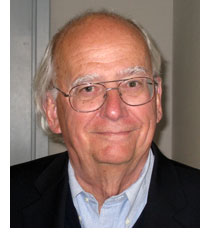
I was partway through Michael Gazzaniga's book 'Who's in Charge? Free Will and the Science of the Mind' when I realized just who he was. In my travels through popular neuroscience, I'd read of his experiments in David Eagleman's 'Incognito.' It dawned on me that I was reading the work of the man who initiated all our understanding of the left-right brain split with a series of simple experiments that used logic to deduce, essentially, who humans were and how our minds worked. He is a living legend in neuroscience.
Not surprisingly, he is a fine writer as well. 'Who's in Charge?' is based on his series of Gifford Lectures, which are available on Youtube.com here: One, Two, Three, Four, Five and Six. When we sat down to speak, I wanted to cover not just his experiments, but his writing process as well. It is one thing to compose a series of speeches given to an audience with the help of slides and one's own resonant voice. It's another to create a reading experience that communicates the same information in the same lively manner, which he has done impeccably.
Of course, we also spent a large amount of time talking about his work in free will and teasing out the upshot of his thoughts and discoveries. What fascinates me is Gazzaniga's methods. We live in a tech-heavy world of neuroscience, where we can aim all sorts of imaging devices at the brain and get some sense of what is happening and where it is happening. But Gazzanga's lab work is more on the level of logic problems; and much of his work happens somewhere between his own mind and his writing. Ultimately, we're looking at a language barrier. We will literally have to create new words, or add new definitions to old words to describe ourselves accurately.
08-21-15: Agony Column Podcast News Report : Senator Claire McCaskill is 'Plenty Ladylike' : Internalizing Determination to Overcome Sexism [Incudes Time to Read EP 211: Claire McCaskill, Plenty Ladylike, plus A 2015 Interview with Senator Claire McCaskill]
Agony Column Podcast News Report : Emily Schultz Unleashes 'The Blondes' : A Cure by Color [Incudes Time to Read EP 210: Emily Schultz, The Blondes, plus A 2015 Interview with Emily Schultz]
07-05-15: Commentary : Dr. Michael Gazzaniga Tells Tales from Both Sides of the Brain : A Life in Neuroscience Reveals the Life of Science
Agony Column Podcast News Report : A 2015 Interview with Michael Gazzaniga : "We made the first observation and BAM there was the disconnection effect..."
04-21-15: Commentary : Kazuo Ishiguro Unearths 'The Buried Giant' : The Mist of Myth and Memory
Agony Column Podcast News Report : A 2015 Interview with Kazuo Ishiguro : ".... by the time I was writing this novel, the lines between what was fantasy and what was real had blurred for me..."
Agony Column Podcast News Report : A 2015 Interview with Marc Goodman : "...every physical object around us is being transformed, one way or another, into an information technology..."
Agony Column Podcast News Report UPDATE: Time to Read Episode 199: Marc Goodman : Future Crimes: Everything Is Connected, Everyone Is Vulnerable and What We Can Do About It