We like to think of history as fixed in the past, as written and encoded, as a series of verifiable facts. But that's just as obviously not the case. History is quite mutable. We can change it with a whim, excise that which we prefer not to think about, and accentuate those events and personalities that please our self-images.
As a corollary, our pleasure in alternate histories is seen to be a joy in "what-if" scenarios. By making the familiar unfamiliar, we are able to once again engage with the facts, albeit in a roundabout manner. All the fiction, it is supposed will lead us verily unto the truth.
Or at least what passes for truth.
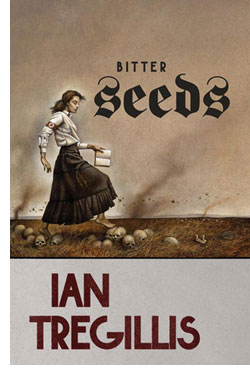
Ian Tregillis writes just the sort of novel that I quite like. 'Bitter Seeds' begins with the purchase of children; the Germans are picking them up for nasty scientific research; the British for nobler ends justified by questionable means; while the aristocrats pass on the wealth of their knowledge to another generation. Twenty years later, all these bitter seeds have borne ... I'll leave that information for the reader to experience, since Tregillis is a clever writer with a flair for spinning a complicated tale that includes threads of science fiction, supernatural horror and über-conspiracy spy-fiction.
Tregillis is best when he is setting up complicated, detailed historical riffs, writing under, over and around the current consensus with an ease that belies his skill. Though the book is a compact 350ish pages, it's the first in the Milkweed Trilogy, according to the author's well-designed websitehttp://www.iantregillis.com/index.cfm. With so much history under its belt already, readers have reason to be optimistic that he'll be able to wrap up the thing in the same concise manner; on the other hand, this is a series that may benefit from more rather than less.
There's no doubt that Tregillis writes well at every level; his prose is evocative and creates a rather terrorizing atmosphere. His sense of plotting is superb, filled with surprises (assuming you haven't read a review that recites the plot) and nicely worked turns that are really quite satisfying. He creates excellent characters, but here's where his admirable tendency to keep things terse works against him a bit. With all the history he has to rewrite and all the plot points he so admirably makes, his characters tend to get the short shrift. It's not a show-stopper by any means — and with two more books in the series there is time to flesh these people. But here in the first historical telling, well, not surprisingly the armies and battles are the point, while the people fighting them are portrayed more in terms of their relations to the war and not one another. While this serves the purpose of the novel, and really does not detract from the reading experience, one does wish to see more of these characters rather than less. The telling point of all this is that were I to give you character sketches of each, I could very well derail the freshness of the plot and of your reading experience. This is a fine enough novel that I prefer to err on the side of ambiguity and let the readers commence their own march into alternate history.
There are more than a few facts behind the elements of the fantastic that Tregillis introduces us to, and his divvying up the data into Good, Evil and Beyond is really quite clever. And the fantastic serves a very strong purpose here in terms of externalizing the fears that drive our actions in the actual world. Oh, we may not actually fear that some Middle Eastern dictator is making a deal with the djinni that will prove disastrous to those on both sides. But our personal visions of apocalypse and death are not subject to reason. Our vision of history is not subject to reason. Our vision of ourselves is not to reason — nor is our vision of our personal history. We all revise memory to suit our moods and needs. Not all of those needs are the sorts of desires we wish to talk about. There are some monsters that are best experienced in print.
04-13-10:John Buntin Paints an 'LA Noir'
Khrushchev in Disneyland
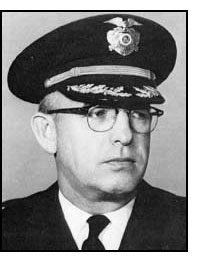
Nikita Kruschev famously wanted to visit Disneyland — and was denied the chance by then LA Police Chief William H. Parker, who decided he could not ensure Khrushchev's personal safety. "If you persist in this, there will be no talk of disarmament," Khrushchev warned Mayor Norris Poulson. There was no visit to Disneyland. The power of the mouse was greater than the power of the bomb.
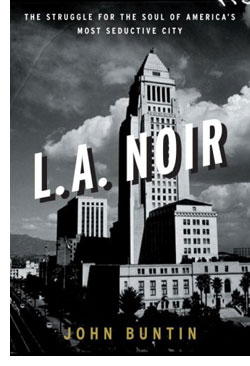
The city of Los Angeles looms large in our literary history, especially for the mystery genre. It should not come as a surprise, then, that actual history offers mysteries and intrigue to equal or excel those written by giants of American literature. What does come as a surprise is that it took so long to bring them effectively to the printed page, in John Buntin's 'L. A. Noir' (Three Rivers Press / Crown Publishing / Random House ; April 6, 2010 ; $16).
LA is not a real city, many contend, and they have a point. To those who live in New York, or London, LA can seem like a bunch of suburbs butting up against one another with no real heart of the city, no real soul of the city. That may indeed be the case now; but perhaps both were bought and sold sometime back in the 1950's. Readers who want to watch that happen, as told in a classic story of conflict, need look no father than John Buntin's 'L. A. Noir.'
The problem with Los Angeles as a city extends to the stories about that city. LA is diffuse. It's literally all over the map, and it's not easy to wrap it up, put a pin in it and say, "Here — this is LA," or "Here — this is the L. A. story."
But John Buntin has tackled and succeeded at that task in a non-fictional format that reads like a cracking good gritty noir novel while telling a truth that will sometimes seem more incredible than one could imagine in the realm of fiction. Khrushchev in Disneyland is only a small detour in Buntin's complex but compelling story.
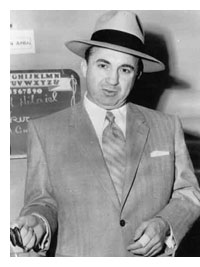
Buntin shapes his tale of Dragnet-era LA around two men; Mickey Cohen, who started his career as an enforcer for Bugsy Siegel, but ended up running crime in LA, and William H. Parker, who discovered the underworld that ran LA in the 1920's and vowed to create an independent police force that would never be beholden to politicians and their patrons.
Buntin managed to get his hands on lots of raw material from which to shape a story we've not seen before; LAPD files of the 50's and 60's and unpublished work by Ben Hecht, for example. But it's not just the new material that makes this book fascinating, it's the verve and skill with which it is written and organized.
Buntin manages to find the connective tissue that is not just his story, but the city of Los Angeles itself. He sees through the diffuse, dispersed panorama to the brutal, beating heart and what grips it so firmly — what draws people to the city and the city itself together. Suffice it to say that chances are after reading this book, you'll mind your manners when driving in Los Angeles.
Buntin also knows how to find the plots in history, how to annotate and when to discard, so that reading 'L. A. Noir,' you'll feel like it's a novel, not a recitation of, as Joe Friday would say, "The facts, Ma'am, just the facts." These are the facts, but there is an art at work here as well. The art of telling a story, the art that holds LA in a grip so tight to this very day.
04-12-10:Jorge Luis Borges Illumines 'Poems of the Night'
"I can be anything. Leave me in the dark."
We turn on the light and open the book. It is time to read, to become who we are.
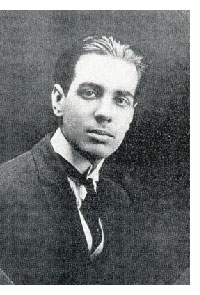
Jorge Luis Borges is known primarily for his ficciones. But the new series collecting his poetry, edited by Suzanne Jill Levine may just change that perception. It is after all, based on our own blindness. Borges first found himself in his poetry. These new collections and translations offer readers a similar opportunity. Earlier this week, I looked at 'The Sonnets.'
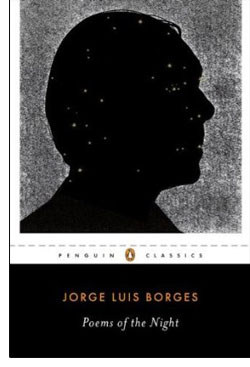
That sterling collection is not all that Penguin has up their sleeve. I can't imagine anyone who enjoys Borges' ficciones would not find the same sort of dark thrills in 'Poems of the Night' (Penguin Classics / Penguin ; March 30, 2010 ; $17), edited, introduced and with notes by Efrain Kristal. These are the poems he wrote that reflect (oh, the mirrors never go away) his interest and investment in the darkness that would eventually overtake him.
'Poems of the Night' spans Borges' career, and includes a number of poems not published in English. Some of my readers may know that I enjoy — not suffer! — insomnia as a genetic inheritance. For reasons unclear to me, I require about five hours of sleep per day and pretty much always have, though the effect has increased as I have aged. So the appeal of a poem titled "Insomnia," one of the first that Borges published is clear; but I think it will have a great appeal to any reader who trends towards dark fiction:
The universe of this night
Is as vast as oblivion, as precise as fever.
....
Flooded lots, slums huddled like dogs, puddles of fetid silver;
I am the hateful watchman of these unmoving placements.
...
Rough clouds the color of wine lees will stain the sky;
And dawn will come to my tightly closed eyes.
Kristal's introduction and notes set the scene well for this collection, evoking Borges' interest in Schopenhauer and Borges' recurring nightmares; not surprisingly, dreams of mirrors and labyrinths. This collection offers a glimpse into the Borges' own poetic vision of the darkness; Kristal quotes Borges: "I have two nightmares that often become confused with each other. I have a nightmare of the labyrinth. ... My other nightmare is that of a mirror. The two are not distinct, as it takes only two facing mirrors to construct a labyrinth." And thusly are you launched into the night.
The book is divided into three sections; "The Poet Dreams," which features work from 1922 to 1957; "The Gift of Blindness," from 1958 to 1977; and "Waiting for the Night," which features work from 1978 to 1985. An Appendix features versions of older poems edited by Borges, who was not averse to disavowing his older work. As with 'The Sonnets,' 'Poems of the Night' prints each poem first in Spanish, on the left page, and then in English on the right page. There's an index and list of sources, the sort of thing that Borges might have rendered in one of his ficciones.
Borges was, first and foremost, a bookworm; and thus his work has a special appeal to readers, those who enjoy that peculiar pleasure of immersing one's self in language, the mental wheels that whir when you transform the words on the printed page into — "reading," as it were. This is surely why his metafictional work is so appealing. Borges, in his fiction turned the mirrors and labyrinths of his nightmares on the reading process itself. He had such a firm grasp on what happens when we stare at words and think about them that he was able to write words that played with that process.
In a sense, he did this first and best in his poetry. As wonderful as his ficciones are, his poetry offers readers a more personal and immediate sense of the reading experience. Here you will find the undermind upturned and brought from the night into the light. Here you will find Signos, Signs, translated by Stephen Kessler:
Signs
for Susana Bombal
Around 1915, in Geneva, I saw on the terrace
of a museum a tall bell with Chinese characters.
In 1976, I write these lines:
Undeciphered and alone, I know
in the vague night I can be a bronze
prayer or a saying in which is encoded
the flavor of a life or of an evening
or Chuang Tzu's dream, which you know already
or an insignificant date or a parable
or a great emperor, now a few syllables
or the universe or your secret name
or that enigma you investigated in vain
for so long a time though all your days.
I can be anything. Leave me in the dark.
New to the Agony Column
09-18-15: Commentary : William T. Vollman Amidst 'The Dying Grass' : An Epic Exploration of Simultaneity
Agony Column Podcast News Report : A 2015 Interview with William T. Vollman : "...a lot of long words that in our language are sentences..."
09-05-15: Commentary : Susan Casey Listens to 'Voices in the Ocean' : Science, Empathy and Self
Agony Column Podcast News Report : A 2015 Interview with Susan Casey : "...the reporting for this book was emotionally difficult at times..."
08-21-15: Agony Column Podcast News Report : Senator Claire McCaskill is 'Plenty Ladylike' : Internalizing Determination to Overcome Sexism [Incudes Time to Read EP 211: Claire McCaskill, Plenty Ladylike, plus A 2015 Interview with Senator Claire McCaskill]
Agony Column Podcast News Report : Emily Schultz Unleashes 'The Blondes' : A Cure by Color [Incudes Time to Read EP 210: Emily Schultz, The Blondes, plus A 2015 Interview with Emily Schultz]
07-05-15: Commentary : Dr. Michael Gazzaniga Tells Tales from Both Sides of the Brain : A Life in Neuroscience Reveals the Life of Science
Agony Column Podcast News Report : A 2015 Interview with Michael Gazzaniga : "We made the first observation and BAM there was the disconnection effect..."
04-21-15: Commentary : Kazuo Ishiguro Unearths 'The Buried Giant' : The Mist of Myth and Memory
Agony Column Podcast News Report : A 2015 Interview with Kazuo Ishiguro : ".... by the time I was writing this novel, the lines between what was fantasy and what was real had blurred for me..."
Agony Column Podcast News Report : A 2015 Interview with Marc Goodman : "...every physical object around us is being transformed, one way or another, into an information technology..."
Agony Column Podcast News Report UPDATE: Time to Read Episode 199: Marc Goodman : Future Crimes: Everything Is Connected, Everyone Is Vulnerable and What We Can Do About It