"Insects become a way of making sense of the world."
— Hugh Raffles
So, yes, I am the kind of gentleman who will turn over a log to see what is underneath. Maybe gentleman is stretching things a bit. Fortunately for me, I have huge backyard and an authentic deadfall, so there's lots of stuff to turn over and lots of stuff to see once I have turned stuff over. If you're a the sort of person who turns stuff over in the backyard to see what's squirming underneath, then you're in the right place.
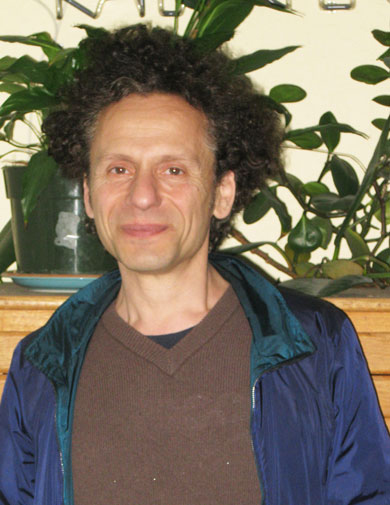
I am also the sort of gentleman who likes to sit in my wingback chair and read thrillingly-written fiction and non-fiction. I particularly like non-fiction that is so compelling it rads like fiction. Which is why I liked 'Insectopedia,' and why I had a grand time talking to Hugh Raffles, the author. At an hour when everyone else in my timezone was hunkering down to an Easter feast, Hugh and I were talking about sky prawns, so delicious when lightly fried. Whether or not you'll like sky prawns depends on how you feel about locusts.
Hugh Raffles showed up spot on-time. This is especially appreciated when you're doing live radio, and especially that night because I'd not brought an emergency disk to pa in the event he didn't show. Raffles brought his wife, who silently joined us in the studio and even helped by closing the studio door, which I'd neglected to do, but I'd noticed needed to be done when I heard some banging about out in the lobby.
Raffles book is one of those works that offers the interviewer a lot to talk about, and the temptation always is to just go A-Z, and cherry pick the best bits. I tried very hard not to do that, because the point of the interview after all is to interest the readers in reading the book, not summarize it. But then beyond the simple facts of what Raffles put in the book, there was a whole world (literally) of research trips and writing techniques he brought to bear in creating this unusual text.
And then of course there are the questions you ask to which you receive rather surprising answers, such as my inquiry into his fever dream chapter. One of the standout aspects of this book was the prose. Raffles is one hell of a good writer, and no matter what you write or how you write it, you can probably learn a few things about writing by reading this book — or listening to the author speak by following this link to the MP3 audio file.
04-07-10: Stephen Kessler and 'The Sonnets' by Jorge Luis Borges
"All things Borgesian"
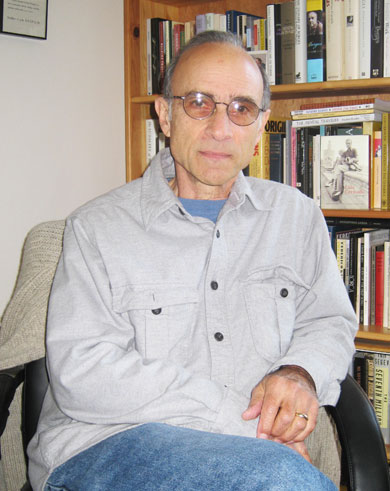
I recently spoke with poet and author Stephen Kessler about his new novel, 'The Mental Traveler,' in a live in-studio interview with his wife, Alta Ifland. What I did not know at the time was that he had recently finished editing and translating (along with others) 'The Sonnets' of Jorge Luis Borges. I can attest that I do not have lots of poetry in my library. But I do have a couple of Borges' books, which of course, I cannot locate at the moment. Borges' poetic voice is rather different from his prose voice, at least in some cases. In conversation with Kessler, I found out why.
Kessler lives across town, on the other side of the bay. I drove over to his house on a lovely spring afternoon, and we set up in his study to chat about as he said, "All things Borgesian." He'll be the first to tell you that he is not a Borges scholar. Apparently Borges is the most critically studied writer after Shakespeare. And Borges himself was a prodigiously prolific critic, so one might wonder if the body of criticism about Borges includes the work by him. Which seems like just the sort of question that the author himself would ponder.
Kessler and I talked quite a bit about Borges life, about which I confess, I knew little. My first encounter with Borges fiction was as a freshman in college, in approximately the same time period when dinosaurs roamed the earth. I have a vivid memory of sitting my dorm room (not coincidentally my book-stuffed office today includes a small bed and is dubbed my dorm room) with a copy of the famous gray 'Ficciones' in my hand. I had recently met the woman who would in the Space Age become my wife. Funny how time telescopes and mirrors itself.
Of course, Borges knew all about that. Kessler gave me a pocket history of the man and some great insights in to his life as a writer. Borges influence is so pervasive that it is hard to understand just how important he is. Sure, he's the Godfather of Magic Realism. But almost as important is a prose style that is so dry and so clear that it to my mind played a big part in shaping much of what we read today. We owe the transparent prose of today to the libraries of 'Tlön, Uqbar, Orbis Tertius.'
But Borges himself was much, much more than a writer of short fiction. I'd never had much of a sense of the man before reading Kessler's introduction to 'The Sonnets,' but from that and from our conversation, I got to know — and like — Borges much better. You can hear our conversation by following this link to the MP3 audio file.
04-06-10: The VanderMeers on The New Weird
A Brief History of Literary Movements
It's not raining here other than metaphorically, but it seems somehow right to run this interview with the Hugo Awards. Remember back a few years ago when the "New Weird" was all the rage?
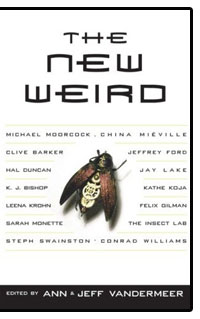
You're actually seeing the upshot of that literary movement in this year's Hugo novel nominations with China Miéville's 'The City & The City,' and to my mind 'Boneshaker' as well, though that also slots into another hot-topic trend-setting buzzword genre, "steampunk." Catherynne M. Valnet's 'Palimpsest' also fits well into the New Weird movement. So let's dial back to 2008, when Ann and Jeff VanderMeer had just released 'The New Weird,' and see how what they said then sounds now. Was The New Weird a literary movement?
Genre and subgenre, all the limitations, inspirations and aspirations of literary leaders and movements serve a commendable purpose — to put good reading into the hands of readers. These are groups of writers who are thinking hard about the reading landscape, about what is out there on offer to readers, about how to make individual reading experiences more rewarding as the result of discussions about writing between writers.
And so we have the husband-and-wife team of Ann and Jeff VanderMeer, who, with a selection of independent publishers, have continued to discuss different visions of genre fiction and create themed anthologies around those visions.
I managed to get Jeff and Ann together in Florida and myself in San Francisco for a discussion of their anthology 'The New Weird' and the movement itself. If you listen to the interview and the subjects and writers discussed, I think it is quite clear that The New Weird has sort of taken over the cutting edge of that loosely collected genres of science fiction, horror, fantasy and even in the case of China Miéville, mystery.
The podcast begins with a longish (5 minutes) reading by Ann and Jeff from their introduction, and then, we charge headfirst into the question, "Is the New Weird a literary movement?" When the interview was conducted, a reasonable conclusion would have been that only time could tell. Take a gander at that Hugo "Best Novel" nominee list. I think time has told. You can dial back the clock by following this link to the MP3 audio file of our interview.
04-05-10: A 2009 Interview With Jonathan Lethem
"The future doesn't arrive and replace the past, it just piles up alongside it." —Johnathan Lethem
Unfortunately, the piles look pretty much alike.
And the smell ain't so different either.
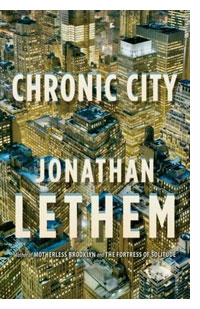
Jonathan Lethem is one of those authors who is like a living literary lesson in evolution. Darwin would love him as if he were a moth in London. But unlike Darwin's moths, Lethem does not evolve to fit his environment; he says one step or more ahead of the changes around him. His latest novel, last year's 'Chronic City,' unfolds in a Manhattan that only Lethem can visit. It's a shaggy gang-of-friends novel wrapped around a sweetly sad science fiction love story. It's the future as imagined by a past that never passed.
I managed to snag Jonathan Lethem like last year, and saved this interview for a rainy day, and even if it is not raining, well, it is at least (unusually) daylight as I write this, and the world has changed myriad times in the interval.
Nations have risen and fallen, leaders have changed and crowed and crooned and lied and swooned and the eternal city New York, Manhattan, the nether-never land of Two Towers and Kings who never returned remains fixed firmly only in our imaginations and none of them agree on exactly what has happened. The present and the past are as effervescent as the future.
It's weird, I must admit. I've talked to Lethem, I think three times now, and each world we occupied was utterly unlike the previous one. We've gone from past to present, from bust tom boom and back to bust, and the clarity of Lethem's peculiar vision seems to remain intact and not detached. He's connected to this world by strings that he sees more clearly than any of us. He creates them, all these books and words, and they are nothing if not terrifically entertaining.
08-21-15: Agony Column Podcast News Report : Senator Claire McCaskill is 'Plenty Ladylike' : Internalizing Determination to Overcome Sexism [Incudes Time to Read EP 211: Claire McCaskill, Plenty Ladylike, plus A 2015 Interview with Senator Claire McCaskill]
Agony Column Podcast News Report : Emily Schultz Unleashes 'The Blondes' : A Cure by Color [Incudes Time to Read EP 210: Emily Schultz, The Blondes, plus A 2015 Interview with Emily Schultz]
07-05-15: Commentary : Dr. Michael Gazzaniga Tells Tales from Both Sides of the Brain : A Life in Neuroscience Reveals the Life of Science
Agony Column Podcast News Report : A 2015 Interview with Michael Gazzaniga : "We made the first observation and BAM there was the disconnection effect..."
04-21-15: Commentary : Kazuo Ishiguro Unearths 'The Buried Giant' : The Mist of Myth and Memory
Agony Column Podcast News Report : A 2015 Interview with Kazuo Ishiguro : ".... by the time I was writing this novel, the lines between what was fantasy and what was real had blurred for me..."
Agony Column Podcast News Report : A 2015 Interview with Marc Goodman : "...every physical object around us is being transformed, one way or another, into an information technology..."
Agony Column Podcast News Report UPDATE: Time to Read Episode 199: Marc Goodman : Future Crimes: Everything Is Connected, Everyone Is Vulnerable and What We Can Do About It